



Leaving school can be strange. After spending so much time in education - and
looking forward to having some freedom - leaving seems to come around quickly.
You're expected to have plans in place and be ready for the working world. But it's
easy to feel the exact opposite - unprepared and anxious for what the future holds.
You're more ready than you'd ever imagine, though.
Everyone leaving school is in the same boat, dealing with mixed emotions and
pressure from others. While what you do after school influences your future, don't
let that deter you from exploring different avenues. You should be excited. There
are so many options and it's a great time to kick-start a career.
We'll be looking at apprenticeships in Scotland, where to start looking for jobs and
much more to arm you with the right information to make your own choices and start
creating a successful career.
Many of you reading this will fully understand the Scottish school system (having
just been through it), however for clarity, we will have a brief recap. After seven
years of primary school (P1-P7), secondary education starts in high schools or
academies. You progress through S1 to S5, and can opt to stay for S6. In Scotland,
education is only compulsory until you're 16. It's likely you'll be 15 when you take
your Nationals, after which you can leave to get a job or apprenticeship.
During S5, you'll normally study towards four or five Highers, which would enable
you to go on to university in Scotland. If you stay on after S5, you'll do further
Highers and Advanced Higher qualifications. Although the Highers you achieved during
the fifth year of secondary school provide the entry requirements for university,
it's becoming increasingly common for applicants to continue through to S6.


If you turn 16 between 1 March and 30 September you can leave school after 31
May of that year.
If you turn 16 between 1 October and the end of February you can leave at the
start of the Christmas holidays in that school year.
Everyone will have an opinion on what you should be doing after school. Whether it's an
auntie who thinks you'd be suited to teaching or a friend who wants you to join them at
uni, people like to let you know. The opinions you're offered will be varied and
potentially confusing. Always remember it's your choice.
Some people know exactly what path they want to take, but others will struggle with what
to do. Either way, there are some useful questions to ask yourself:
Scotland's education system is one of the world's best - at all levels. It
boasts fantastic further education opportunities, including the following
universities:


After spending years with your days planned, surrounded by friends, leaving school is a
huge transition. It's an abrupt start to adulthood. On one hand, you have new-found
freedom. On the other, you've lost the security of someone else making sure you're on
track. Leaving school is a huge change in responsibility.
While you may be trying to focus on deciding what to do, you'll also be dealing with a
mix of emotions. How do you do this?

Many people leave school confused. It's what makes work experience so useful because you
get a great idea of what you do - and don't - enjoy about an industry. Every experience
is useful. Even if you decide it's not the right role for you, you could have enjoyed
aspects and get a better perspective about where your skills lie.
The benefits of work experience include:
If your school doesn't organise or advise on work experience, it can be difficult to
know where to start. It's something you can do during the holidays or after you've
finished your exams, but it's best to plan to secure placements. Businesses need to
prepare - you can't expect to email on a Friday and start on a Monday.
To secure work experience, try the following:
In Scotland, our apprenticeships are slightly different - that's no bad thing. They're
broken down into three types: foundation, graduate and modern apprenticeships. In an
effort to hit the 2020 target of expanding the number of apprenticeship starts to 30,000
each year, additional support has been provided in rural areas, funding has been
increased and there are more opportunities for older apprentices too.
And it's working. In 2017,
Skills Development Scotland
announced 26,262 Modern Apprenticeship starts in the previous year. Three quarters of
starts were aged 16 to 24-years-old and more than a third were in science, technology,
engineering and mathematics (STEM) related frameworks.
To determine which apprenticeship is suitable for you, here's a bit more detail:

If you're someone who likes to get ahead, a foundation apprenticeship could be for
you. It's designed for those of you still in secondary school - the idea is you get
workplace experience while still completing your National 5s and Highers, leaving
school with well-rounded experience.
You begin at the start of S5, taking time out of your school day to get the
necessary experience in a workplace to progress towards a Scottish Credit and
Qualifications Framework (SCQF) recognised qualification. What's more, you could be
spending time with some of Scotland's biggest employers, including the NHS and
Network Rail.
The industries on offer are varied too, including software development, financial
services and creative and digital media.
Whether you plan to continue with a modern apprenticeship, head straight into work
or apply for further education, you'll have the right foundation.

Modern apprenticeships have been credited with an overwhelming impact on the
Scottish workforce. With 91% of apprentices in work after six months after they've
qualified, they are a great path to take after school.
A viable alternative to university, during a modern apprenticeship you'll work
towards a qualification that's relevant to the industry you want to enter. This
could be any of the following:
In total, there are more than 80 frameworks to choose from and you can start this
work-based approach to learning as soon as you've reached the Scottish statutory
minimum school leaving age.

The most advanced level of apprenticeship with the same premise as the others - to
provide you with knowledge and experience that's relevant to your industry, but with
the potential to study up to Masters level.
Graduate apprentices only spend roughly one day a week at university or college,
with the rest of the working week dedicated to work-based experience. You'll be as
much of an employee of the company as anyone else, receiving a monthly wage
(national apprentice wage). Your employer will also pay for your course fees.
These apprenticeships are only offered in the IT, digital, civil engineering and
engineering industries at the moment, but there are plans to extend. Opportunities
within industries like cyber security and business management have been proposed.
Diane Greenlees, head of foundation and graduate apprenticeships at
Skills Development Scotland, told the BBC:
"Over the next 10 years we are facing significant and rapid technological
change across all our growth sectors, along with global competition. Young
people now need to have a different set of skills and qualifications to help
them succeed in the workplace.
All our apprenticeships are designed to make sure these young people have
skills, experience and the confidence and competence to succeed in the world
of work much quicker."


Being an apprentice is a rewarding experience, setting you up with the skills needed for
a successful career. Sometimes they get overlooked as an option after school - but an
apprenticeship is one of the best ways to start a career. You'll be treated as an adult,
but given the additional support needed as you start out.
Not yet convinced? Here are the benefits of becoming an apprentice:
To get involved, the Scottish Apprenticeship Week, held every year, is a great way of
seeing how modern and foundation apprenticeships are helping so many school leavers.
Events are hosted across Scotland, so keep updated about the latest announcements
here.
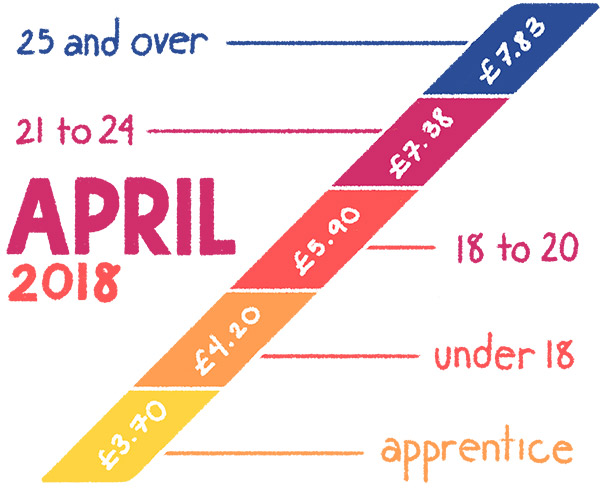
Being paid is one of the most appealing things about an apprenticeship. You get to carry
on learning but unlike university or college, you can start earning money. What you'll
be paid depends on your age. As a school leaver, it's likely you fall into the 16-19 age
bracket. In the first year of your apprenticeship, you're entitled to the minimum
apprenticeship wage of £3.50 per hour.
After your first year - or if you're over 19 when you start - you'll be entitled to the
following minimum wage brackets. Many Scottish employers pride themselves on paying
more.
These rates could change every April and, of course, you could end up with even more
thanks to your skills. It could also depend on the industry and how competitive
employers want to be. Search around for the best positions.
Source: GOV.UK Minimum Wage Rates
You'll always remember the call you got offering you your first full-time job. It's a
real sense of accomplishment. But how do you get to that point? It can take a while,
as a lot of preparation goes into taking that step on the career ladder.
Believing things are a certain way can often hold us back, as we make assumptions about
what can - and can't - be done. To make sure no opportunities are missed, check out all
these myths people tend to believe, and the reasons why you
shouldn't.
Altering your perception slightly can have a huge impact on what jobs you'll put
yourself forward for. The right attitude goes a long way in securing a position.
Getting started on a job search is sometimes the most difficult part. Scrolling through
pages of seemingly irrelevant jobs can be frustrating, especially if you're not having
much luck. A lot of it is to do with where you're looking. Keep a focused search,
without spreading your efforts too thinly, and you'll be on the right track. Here's
where we recommend you start:





You can also maximise your chances of finding the ideal role by doing the following:



You've also got to have the right attitude. If you start your search with a negative
mind set, every listing is going to seem uninteresting or unattainable. But dedicate the
time and positivity, and the results could be altogether different. Search for jobs at a
time when you're feeling full of energy.
Your CV and cover letter is the first impression potential employers will get of you.
You should spend plenty of time making sure it reflects you and your experience. As
you've only just left school, this could be limited. No one expects you to have loads of
jobs under your belt, but you can make your CV stand out and make the most of what you
have done. Treat it like a sales document and think about the following:

Of course, you'll also need to include your grades. Emphasise the subjects relevant to
the job or apprenticeship and include all your grades, but there's no need to go into
great detail about school. Lead with your transferrable skills and interest in the
field. Make sure you've got the basics in there too, including a professional email
address where they can reach you.
People are getting increasingly creative with how they present their CVs, including
infographics and videos. It's something to think about, especially if you think it'll
make you a stronger candidate. Again, it typically depends on the industry you want to
work in.
Interviews can be daunting as a school leaver. You won't have had much - or any -
experience, so the idea of someone firing questions at you is understandably worrying.
But with the right preparation, you can head to any interview feeling confident of your
ability. After all, it's only a conversation - the more you can relax and be yourself,
the more an interviewer will warm to you.
To make sure you feel ready, think about all stages of an interview.


Don't worry if you don't have pages of experience. There are skills that all
school leavers can demonstrate:


Leaving school is a huge milestone in your life. Make it a memorable one by securing
a job or apprenticeship which will give you skills for life.
To discover more information to support you when leaving school, check out the following
links:
Leaving school this summer?
https://www.myworldofwork.co.uk/leaving-school-summer
Leaving school: your options
https://www.mygov.scot/leaving-school-options/
How to decide what to do after leaving
https://www.barclayslifeskills.com/i-want-to-choose-my-next-step/school/how-to-decide-what-to-do-after-school/
The Student Room: Emotional about leaving school
https://www.thestudentroom.co.uk/showthread.php?t=207674
A word of advice for school leavers: 'know yourself and don't be afraid to
fail'
https://www.telegraph.co.uk/education/educationopinion/11715615/A-word-of-advice-for-school-leavers-know-yourself-and-dont-be-afraid-to-fail.html
A guide to school-leaver programmes: advice from our experts
https://www.theguardian.com/careers/school-leaver-programme-advice-experts
The top ten skills that'll get you a job when you leave school
https://targetcareers.co.uk/careers-advice/skills-and-experience/40-the-top-ten-skills-that-ll-get-you-a-job-when-you-leave-school
Helping your child prepare to leave school
https://www.myworldofwork.co.uk/learn-and-train/helping-your-child-prepare-leave-school
Applying for apprenticeships in Scotland
https://www.ucas.com/applying-apprenticeships-scotland